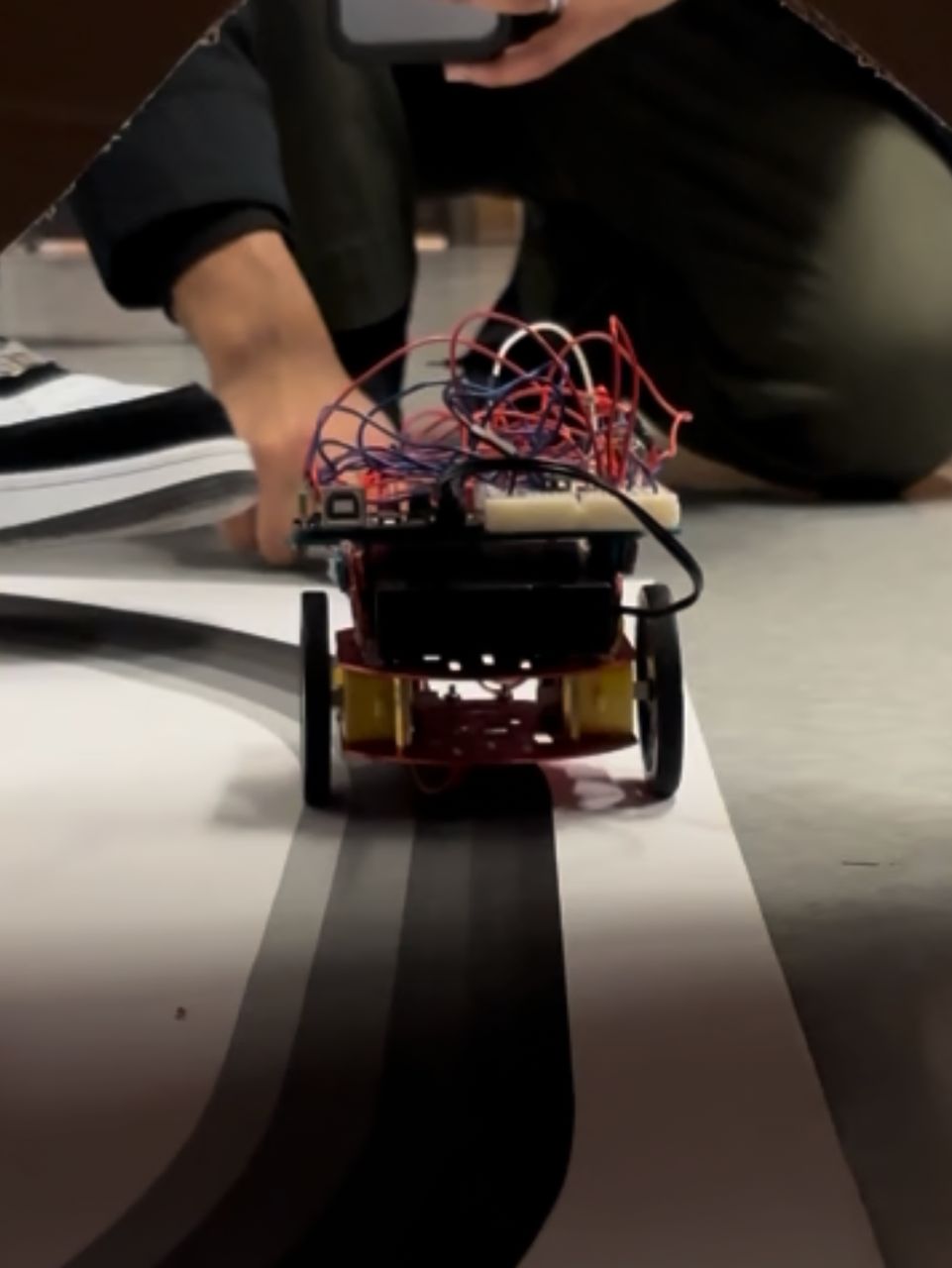
Overview
During my first year studying Mechatronics Engineering, I built a fully functional line-following robot using Arduino. The robot detects and follows a black line using infrared sensors and controls two DC motors based on real-time sensor input.
Challenge
Designed and built a two-wheel differential drive robot capable of autonomously following a black line using infrared sensor feedback and motor control algorithms.
Hardware
- • Arduino Uno
- • L298N Motor Driver
- • Dual DC motors
- • Infrared reflective sensors
- • Breadboard prototyping
- • External battery supply
- • Resistors and indicator LEDs
Software & Approach
- • C++ (Arduino IDE)
- • Conditional logic for line detection
- • PWM motor control for speed adjustment
- • Real-time sensor input processing
Challenges Faced
- ⚠ Calibrating IR sensor thresholds for different lighting conditions
- ⚠ Eliminating motor speed imbalance
- ⚠ Managing power supply stability
- ⚠ Debugging wiring and short circuits
Key Learnings
- ✓ Sensor calibration and threshold tuning
- ✓ PWM motor speed control
- ✓ Hardware debugging and wiring errors
- ✓ Real-world signal noise and power management
Outcomes
- → Successfully achieved stable line tracking with consistent motor response and minimal deviation from path
- → Built foundation for more advanced robotics systems
- → Gained practical understanding of hardware-software integration
Results
Successfully achieved stable line tracking with consistent motor response and minimal deviation from path. This wasn't just about coding — I had to troubleshoot wiring issues, motor inconsistencies, and sensor misreadings before getting smooth motion.